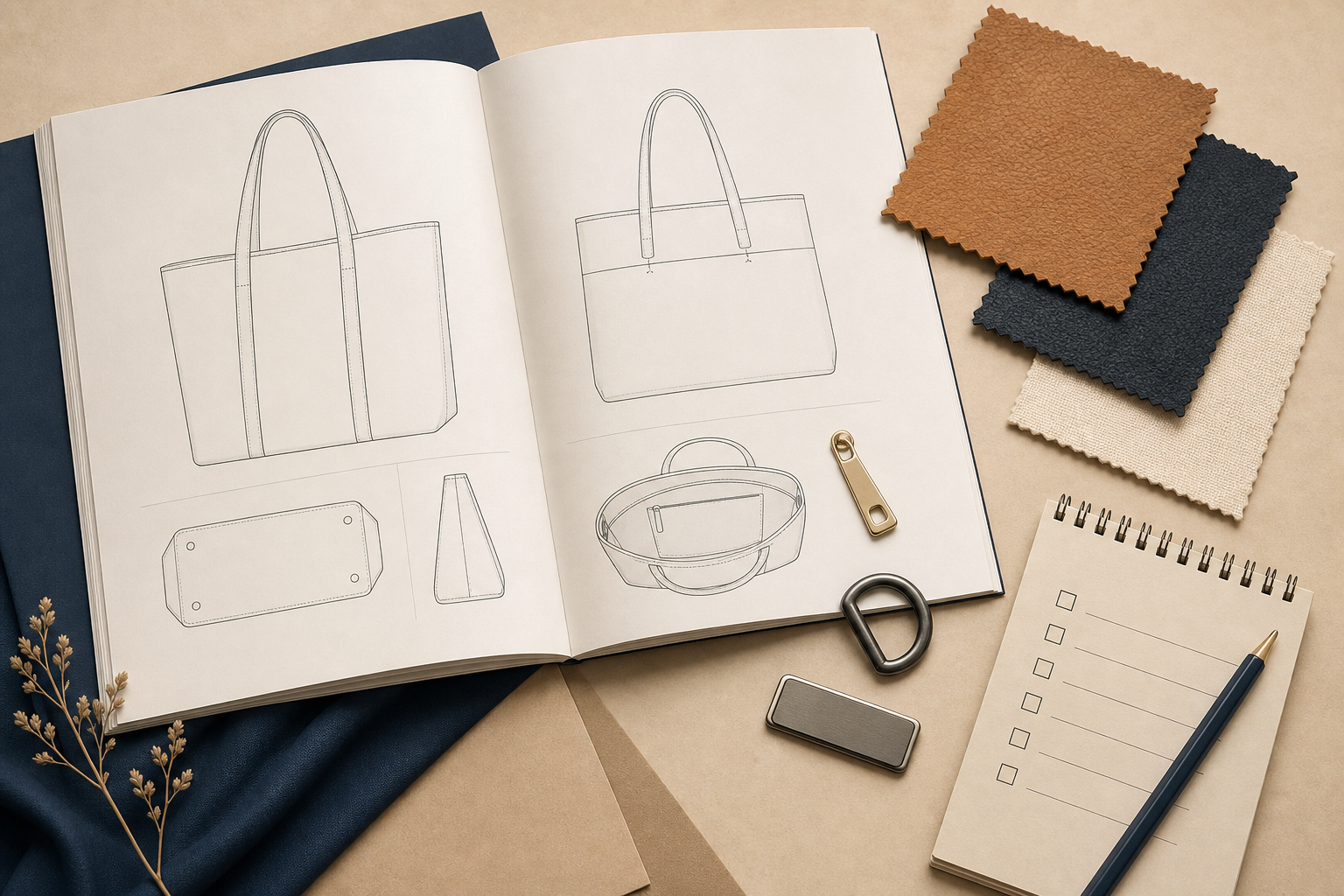
Cover image source: AI-generated editorial illustration created for this article (not a Katehandbag factory photograph). Copyright complaint / request image removal: kate@katehandbag.com. 侵权投诉请邮件联系,核实后删除图片。
Brands lose weeks in sampling when the first brief is incomplete. The factory can cut a shell, but without clear materials, hardware, and branding rules, every revision restarts the clock. This note is what we ask buyers to lock before we cut a first sample on our Huadu floor.
Start with one clear style reference
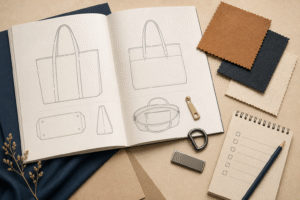
Send one primary reference — a tech pack, flat sketch, or a factory sample style code you want to adapt. If you have three competing shapes, pick one for the first round. Multiple silhouettes in one brief usually means three half-finished samples instead of one you can quote.
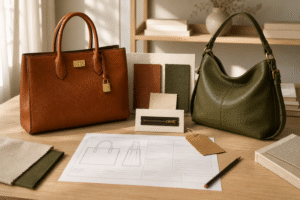
If you are building from our showroom, name the style code (for example a tote or hobo base) and list only the changes you need: handle drop, pocket layout, lining color, or hardware finish.
Lock materials before you argue about stitching
For each panel, write:
- Face material (leather, PU, or fabric) and a target hand-feel
- Thickness or weight if you already know it
- Lining type and color
- Whether the bag must pass a specific labeling rule in your market
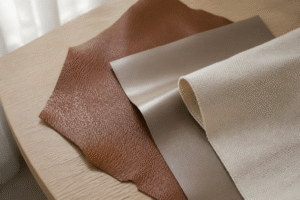
If you are still comparing leather vs PU vs fabric, say so — we can sample one construction in two faces — but do not leave “nice vegan leather” as the only line. Ambiguous face goods are the most common reason a first sample comes back “close but not right.”
Hardware and zipper: specify finish and function
List zipper brand preference if you have one, tooth size, puller shape, and metal finish (gold, silver, gun-metal, matte black). Note magnetic snaps, turn-locks, D-rings, and feet. If the bag must sit upright on a retail shelf, say so; that changes bottom structure and reinforcement more than people expect.
Branding method for private-label vs unbranded
Private-label programmes need a logo method early: deboss, foil, metal plate, woven label, or hangtag only. Unbranded programmes still need packing rules — dust bag, carton marks, and whether any factory mark is allowed inside.
Do not send licensed artwork unless you already have written approval for that programme. We develop construction from blank structures; licensed prints are a separate compliance path.
Quantity, port, and timing (even for a sample)
Even at sample stage, tell us:
- Target bulk quantity band (so we choose a construction that still works at scale)
- Preferred Incoterms and port (FOB Shenzhen or Guangzhou is common for us)
- Your sample deadline and who approves the sample on your side
On our Huadu floor, sampling is typically about two weeks after specs and materials are locked. Bulk after sample and order confirmation is typically about two months FOB. Site MOQ starts from 500 pieces per style; larger programmes are quoted to the brief.
What “done” looks like before we cut
A first-sample brief is ready when we can answer yes to all of these:
- One silhouette is chosen.
- Face, lining, and main hardware finishes are named.
- Logo / unbranded packing rules are written.
- Someone on your team will approve the sample within a set window.
If any of the four is missing, we will still talk — but we will flag the gap before cutting, so you do not pay for a sample that cannot be judged.
How to send the brief to Katehandbag
Email kate@katehandbag.com with the style code or tech pack, target quantity, and port. Or start from our sample styles page and ask for a quotation against a KH style code. We reply within 24 business hours.
View sample styles on the site → Request a quotation, or WhatsApp Business +86 13580941730 after you have a style code ready.