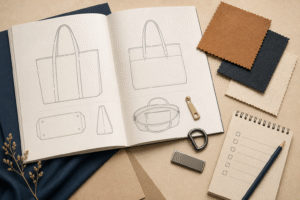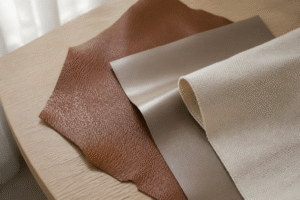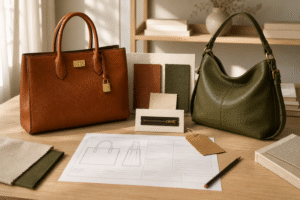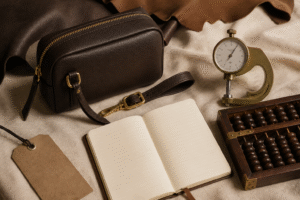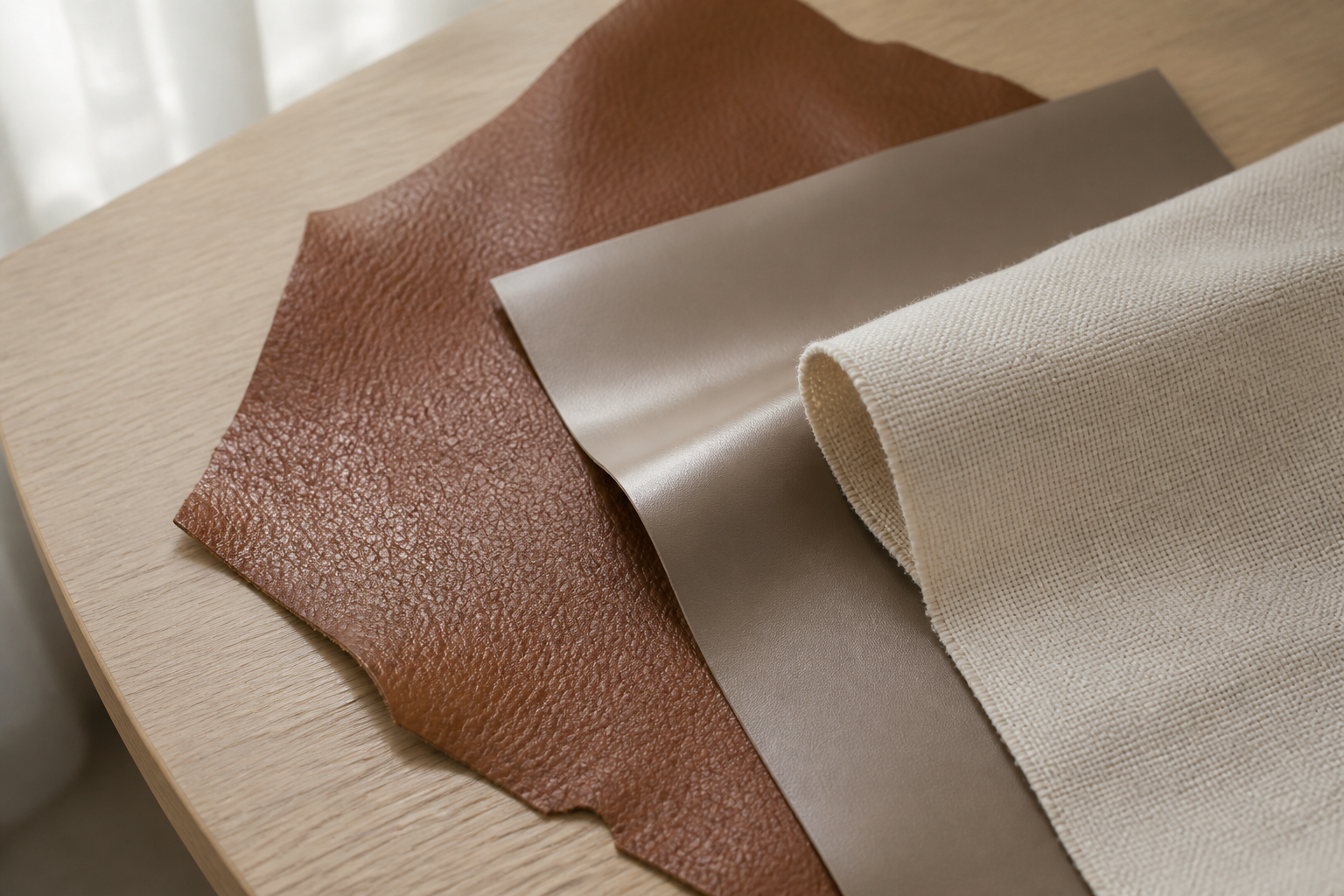
Cover image source: AI-generated editorial illustration created for this article (not a Katehandbag factory photograph). Copyright complaint / request image removal: kate@katehandbag.com. 侵权投诉请邮件联系,核实后删除图片。
Leather, PU, or fabric—how to choose
Material choice sets hand-feel, cost band, care instructions, and how the bag ages. For OEM/ODM programmes, lock the face and lining specs before you treat the sample as approved. Changing material after approval usually means a new sample cycle.
Below is a practical comparison for buyers and developers—not a ranking of “best” materials.
Leather
Where it fits: premium private-label lines, structured totes, shoulder bags where grain and aging matter.
What to decide early
- Full-grain, top-grain, or corrected grain
- Thickness / weight and whether split is used on secondary panels
- Finish: aniline, semi-aniline, pigmented, coated
- Colour fastness expectations for your market
Watch on first sample
- Colour match to approved swatch under store lighting and daylight
- Softness vs structure (does the bag hold shape?)
- Edge paint adhesion on cut edges
- Hardware plating contrast against the leather tone
Leather programmes often need longer material lead time than stock PU. Confirm hide availability when you lock the brief.
PU (polyurethane / synthetic leather)
Where it fits: fashion and mid-market programmes, consistent colour lots, easier care claims, many private-label and unbranded runs.
What to decide early
- Base fabric weight and coating thickness
- Surface: matte, gloss, embossed, printed
- Flexibility in cold weather if your market needs it
- Whether backing shows through on light colours
Watch on first sample
- Smell (solvent residual should be within your acceptance)
- Crease whitening on fold lines
- Stitch tear-out at stress points
- Colour consistency across panels from the same roll lot
PU is often faster to reorder in matching colour than specialty leather—confirm mill MOQ and dye-lot rules with the factory.
Fabric (canvas, nylon, polyester, and blends)
Where it fits: casual, outdoor-leaning, lightweight, or logo-print heavy styles; also linings and contrast panels.
What to decide early
- Fibre content and denier / gsm
- Coating or water-repellent finish if required
- Print method (sublimation, screen, woven) vs solid dyed
- Abrasion expectation for base and corners
Watch on first sample
- Seam strength and fraying after trim
- Print registration and wash/rub fastness if printed
- Lining show-through on light fabrics
- Hardware pull-through on thin shells
Fabric bags still need the same packing and QC discipline as leather—do not treat “simple material” as “simple construction.”
Lining is not secondary
Lining choice affects perceived quality as much as the face. Note:
- Pocket fabric vs shell fabric (same or contrast)
- Whether lining is branded (print, woven label) or plain
- Colour bleed risk onto light face materials
Put lining on the same approval sheet as the face.
What to measure on the first sample
Bring a short checklist to the sample review:
- Dimensions — L × W × H, strap drop, handle height vs tech pack
- Weight — empty bag weight if shipping cost or retail claim matters
- Thickness feel — face and lining hand-feel vs approved swatches
- Hardware operation — zipper run, clasp open/close, rivet security
- Stitch quality — SPI consistency, skipped stitches, back-tack at stress points
- Edge paint — coverage, crack after gentle flex
- Logo — position, size, method clarity (deboss / foil / metal / patch)
- Odour and surface defects — scratches, pinholes, coating bubbles
Photograph the sample next to a colour card and keep the approved piece (or sealed swatches) as the bulk reference.
Labeling questions to settle before bulk
Ask and document:
- Care label language and fibre content (market rules differ)
- Country of origin marking
- Brand hangtag / barcode / RF ID if retail-ready
- Restricted substance expectations for your destination market
- Whether “leather,” “genuine leather,” or synthetic descriptors are accurate for your face material—do not over-claim
Your factory can follow the artwork and label copy you supply; you own the compliance wording for the markets you sell into.
How we work materials on the Huadu floor
Primary path is our Huadu, Guangzhou floor. We run private-label and unbranded programmes. Blank structures and factory samples by style code are a practical starting point when you do not yet have a full tech pack—then lock face, lining, and hardware before sampling.
Sampling typically takes about two weeks after specs and materials are locked. Bulk is typically about two months FOB after sample approval and order confirmation, shipping via Shenzhen or Guangzhou.
Next step
Share your preferred face/lining direction, target market, and style references. We will align materials to the brief and quote sample plus bulk.
Request a quotation / sample styles: kate@katehandbag.com · View sample styles · Request a quotation
WhatsApp Business: +86 13580941730
Ask for sample styles and a quotation when your material board is ready—or send sketches and we will propose options.