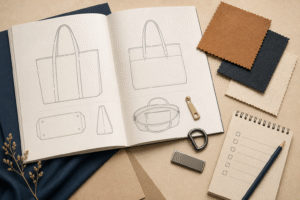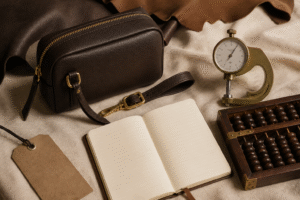
Cover image source: AI-generated editorial illustration created for this article (not a Katehandbag factory photograph). Copyright complaint / request image removal: kate@katehandbag.com. 侵权投诉请邮件联系,核实后删除图片。
QC is a process, not a single glance at the carton
A handbag leaves the factory after several inspection points—not only a final open-box check. For B2B buyers, the useful question is: what is checked at each stage, and what evidence do you receive before goods ship FOB Shenzhen or Guangzhou.
This article describes a practical OEM inspection flow on a Huadu floor. It does not invent defect percentages or “industry average” fail rates—those belong in your own AQL agreement with the supplier.
Incoming QC (materials and hardware)
Before cutting starts, check what arrived against the approved sample and PO.
Typical checks
- Face and lining: colour vs approved swatch, hand-feel, obvious coating or grain defects
- Hardware: finish, plating colour, zipper brand/type if specified, function sample
- Labels and packing materials: artwork match, language, barcode readability if supplied
- Quantity and lot marking so dye lots can be traced if a problem appears later
What brands should ask for
- Confirmation that materials match the locked brief (or a signed deviation)
- Photo or short note when a substitution is proposed—never silent swaps
Incoming failures should stop the line from cutting that lot until you or your QC agent accept a fix.
In-process QC (cutting and sewing)
Problems found after the bag is fully assembled cost more to fix. In-process checks catch them earlier.
Cutting
- Pattern version matches the approved sample
- Nesting and grain direction where it matters (especially leather)
- Edge cleanliness; no excessive notches or wrong panel pairing
Sewing and assembly
- Stitch type and SPI vs tech pack
- Seam allowance consistency
- Pocket placement and symmetry
- Edge paint application before full cure and after light flex
- Hardware installation torque / security (rivets, screws, zipper stops)
Supervisors or dedicated QC on the line typically pull pieces at defined stations. Agree in advance whether critical defects (wrong logo, broken zipper, missing rivet) require 100% check at that station.
Final QC (finished bag before packing)
Final inspection is the last chance to catch issues before polybag and carton.
Functional
- Zipper open/close full length
- Clasps, magnets, turn-locks operate and align
- Straps and handles secure; stitch back-tacks present at stress points
- Bag stands / sits as designed (structured styles)
Visual
- Scratches, stains, glue marks, uneven edge paint
- Logo position, clarity, and method
- Thread ends trimmed; lining clean and correctly oriented
- Colour consistency within the carton and across cartons from the same lot
Measurement
- Key dimensions vs tolerance on the tech pack
- Weight spot-checks if you use weight as a proxy for material grade
Packing
- Correct polybag / tissue / dust bag / hangtag
- Carton mark, quantity per carton, and mixed-size rules
- Moisture and crush protection appropriate for sea freight
What to ask for in QC reports
Do not settle for “OK” with no detail. Request:
- Inspection date, style code, PO / order number, quantity presented
- Standard used — e.g. your AQL level and sample size, or agreed checklist
- Defect classification — critical / major / minor with definitions you both signed
- Findings list — defect type, count, photo evidence
- Measurement sheet — sample of measured dimensions vs tolerance
- Disposition — pass, sort & rework, or hold
- Rework confirmation — if sort/rework happened, a short re-check note before ship
For first bulk of a new style, many buyers also request a pre-shipment photo set or a third-party inspection. State that in the PO so it is not an afterthought.
Align acceptance before production, not at the pier
QC only works if the approved sample and written tolerances exist. Before bulk:
- Freeze the golden sample (or sealed swatches + photo pack)
- Write dimension tolerances and “not acceptable” examples (e.g. logo off-centre by X mm)
- Agree how edge paint cracks, zipper tape shade, and hardware plating variance are judged
- Confirm whether private-label and unbranded packing need different checklist lines
Site MOQ starts from 500 pcs per style; larger programmes are quoted to brief. Sampling is typically about two weeks after specs and materials are locked. Bulk is typically about two months FOB after sample approval and order confirmation.
Next step
If you are preparing a new style, send the tech pack or factory sample style code plus your QC expectations (AQL or checklist). We will align inspection points to the brief.
Request a quotation / sample styles: kate@katehandbag.com · View sample styles · Request a quotation
WhatsApp Business: +86 13580941730
Ask for sample styles and a quotation—and attach your QC checklist if you already have one.